
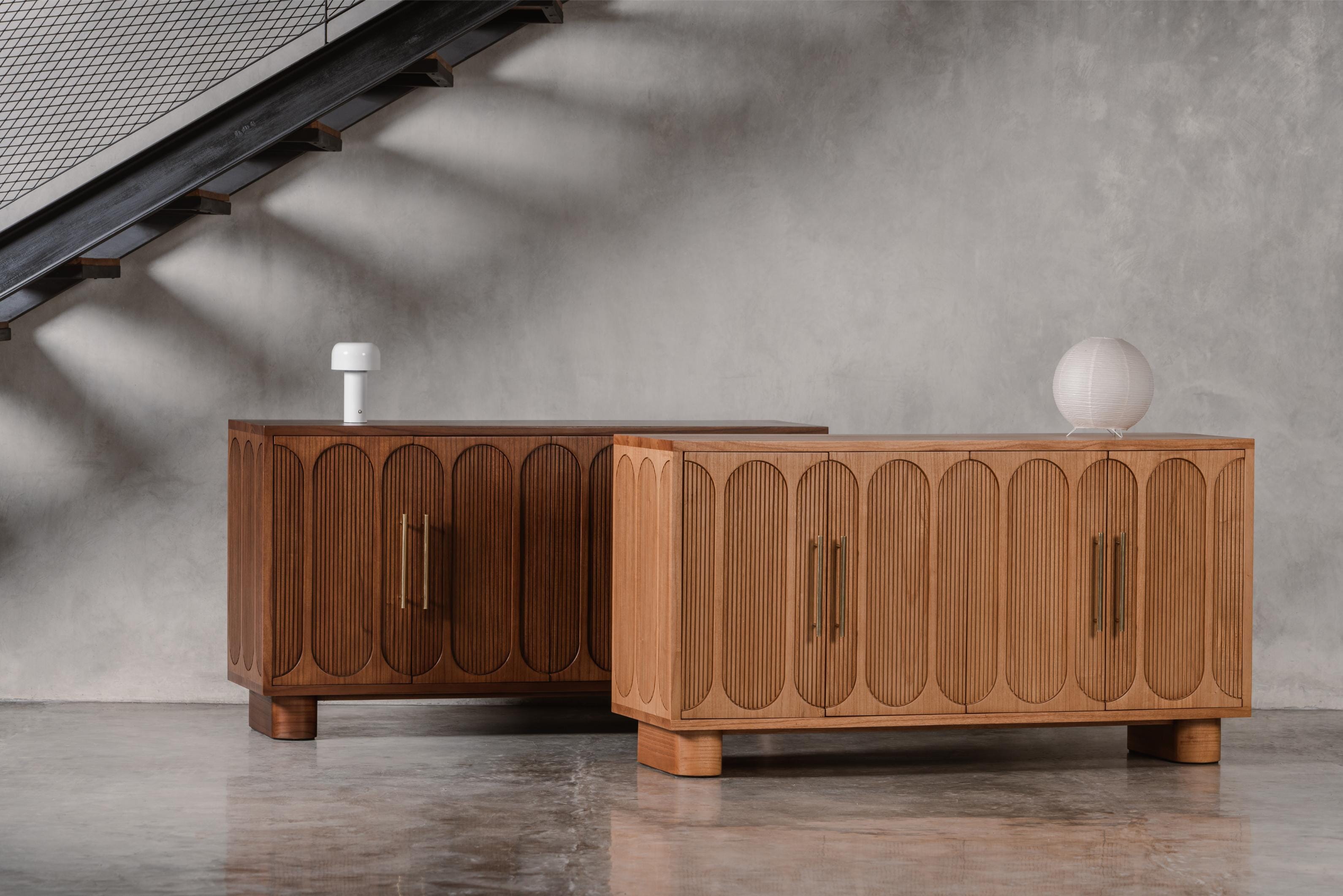
Acacia Wood Furniture Australia: What It Is, How It Performs, and When It's the Right Choice
If you've been researching timber furniture in Australia recently, acacia wood has probably come up more than once. A furniture brand named after it has grown quickly in this market, and "acacia wood furniture Australia" is one of the most searched terms in the category right now. Yet most buyers, and frankly, many retailers, couldn't give you a straight answer about what acacia wood actually is, where it really comes from, or what it can and can't do over a twenty-year lifespan in an Australian home.
This guide covers all of it. No sales pitch. Just the material facts, so you can make an informed decision before spending a significant amount of money on furniture you'll live with for decades.
What Is Acacia Wood?
Acacia is a genus of trees and shrubs with over 1,000 species found across Australia, Africa, Asia, and the Americas. In Australia, the acacia is so embedded in the landscape and culture that one species, Acacia pycnantha, the Golden Wattle, is the nation's floral emblem. Australians know acacia as wattle. It's on the coat of arms. It lines country roads. It's genuinely, authentically Australian.
Here is where it gets interesting for furniture buyers: the acacia wood most commonly used in furniture manufacturing is not sourced from Australia.
The species used in the vast majority of acacia wood furniture on the global and Australian market is Acacia Nilotica, commonly called Babul. Babul is native to Africa, India, and the Middle East. It is, in fact, classified as an invasive species in Australia, not a native one valued for its timber. European settlers and global trade spread the genus worldwide, and the furniture industry largely sources its acacia from Southeast Asia, India, and Africa, where plantation cultivation is efficient and cost-effective.
This isn't a scandal. It's just geography. But it's worth knowing, particularly in an Australian market where "local" and "native" carry real weight in purchasing decisions.
The Physical Properties of Acacia Wood
Whatever its origin, acacia timber has genuinely impressive material properties. Here's what the data shows.
Hardness
Acacia scores approximately 2,300 on the Janka hardness scale, the industry standard for measuring how much force is required to embed a steel ball into a wood surface. For context:
| Timber | Janka Rating |
|---|---|
| Acacia (Babul) | ~2,300 lbf |
| European White Oak | ~1,290 lbf |
| American Walnut | ~1,010 lbf |
| Teak | ~1,070 lbf |
| Victorian Ash | ~1,100 lbf |
| Pine (Radiata) | ~710 lbf |
Acacia is harder than almost everything it's compared to. That density makes it highly resistant to surface dents, scratches, and everyday wear, which is why it became popular for both furniture and kitchen surfaces like chopping boards.
Moisture and Pest Resistance
Acacia contains natural oils that give it inherent resistance to moisture, decay, and insects without requiring heavy chemical treatment. This makes it well-suited to outdoor furniture and high-traffic areas like dining rooms and kitchens. Its antimicrobial properties also make it a food-safe surface choice, hence its popularity for serving boards and butcher blocks.
Important caveat: acacia is water-resistant, not waterproof. Prolonged standing water, particularly in joints and end grain, will eventually cause problems. Outdoor acacia furniture needs regular oiling, ideally every six to twelve months, and should not be left unprotected through an Australian summer without UV sealant. The natural oils deplete over time, especially under direct sun, and the surface will grey and dry out if neglected.
Grain and Appearance
Acacia's grain is characteristically wavy, interlocked, and irregular. No two slabs are identical. Colour ranges from light honey and amber through to deep reddish-brown and occasionally near-black, depending on species and origin. The dramatic variation is a genuine selling point for buyers who want a piece with visual character and organic personality.
That said, and this becomes relevant when choosing furniture for a refined interior, the irregularity can be difficult to control. Matching grain and tone across a dining table and sideboard, or across six chairs, requires careful timber selection and significantly more skilled grading. Mass-produced acacia furniture often shows quite marked tonal inconsistency between pieces because this grading step is skipped to keep costs down.
Sustainability
Acacia grows fast. Where oak or walnut may take 20–30 years to reach harvest maturity, plantation acacia can be harvested in as little as 5–15 years depending on species and growing conditions. This faster cycle, combined with acacia's ability to grow in degraded soils and its nitrogen-fixing root systems (which replenish rather than deplete soil), makes it one of the more genuinely sustainable commercial timber options available. FSC-certified acacia is widely available and worth looking for.
Where Acacia Wood Furniture Performs Well
Being honest about a material's strengths serves buyers better than vague praise. Acacia genuinely excels in the following applications:
Outdoor furniture. Its natural oil content and density make it one of the better hardwoods for Australian outdoor conditions, coastal humidity, UV exposure, temperature variation. Teak is technically superior for outdoor longevity, but acacia performs well and costs considerably less.
Dining tables for family use. The hardness means it takes years of daily use, plates, cups, schoolwork, weekend meals, without degrading badly. A well-finished acacia dining table is a practical choice for households that use furniture heavily.
Budget-to-mid-range buyers wanting real wood. The furniture market is flooded with MDF, particleboard, and veneer products falsely marketed as "timber." Acacia is genuine hardwood at a price point significantly below teak, American oak, or premium Central Javanese hardwoods. If your budget is constrained and you want solid wood rather than engineered board, acacia is a legitimate option.
Rustic, coastal, and farmhouse aesthetics. The wavy grain, live-edge suitability, and warm amber tones work beautifully in spaces designed around natural, organic, or relaxed styles.
Where Acacia Has Limitations
This section matters more than the marketing on most furniture websites lets on.
Humidity Sensitivity
Like all solid hardwoods, acacia expands and contracts with humidity changes. Australian homes, particularly in Melbourne, where temperatures and humidity can shift dramatically between seasons, put real stress on timber. Acacia's fast growth means its cellular structure is less dense and uniform than slow-grown hardwoods, and it can be more prone to movement, surface checking (hairline cracks), and joint stress in environments with significant seasonal humidity swings.
This doesn't make it a bad choice. It makes it a choice that requires proper finishing, acclimatisation before installation, and reasonable humidity management. But it's relevant to know before purchasing a large piece for a poorly insulated Victorian-era home in Melbourne's east.
Tonal Inconsistency at Scale
As mentioned above, acacia's natural variation is beautiful in a single statement piece. Across a complete room, matching dining table, buffet, bedside tables, a wardrobe, controlling for tonal and grain consistency requires a level of timber grading and selection that most mass-market manufacturers don't invest in. The result is furniture that looked cohesive online but feels slightly mismatched in person.
Premium manufacturers who specify acacia spend significantly more on grading and selection to solve this problem. Cheaper product does not.
Not the Material of Choice at the Luxury End
This is not a criticism, it's a category distinction. Acacia is widely used, widely available, and well understood by manufacturers globally. That accessibility is part of what makes it affordable. But "widely used" is, by definition, the opposite of exclusive. In the luxury residential and hospitality space, five-star hotels, high-end private residences, custom-built spaces where the brief is distinctly elevated, specifiers rarely choose acacia as a primary material. The go-to timbers at that level are teak, American white oak, European oak, and select tropical hardwoods from managed Indonesian plantations with decades of tradition behind them.
If you're furnishing a home where quality is genuinely the brief rather than value-for-money, understanding where acacia sits in that hierarchy is important context.
Acacia vs. Premium Hardwoods: A Practical Comparison
| Acacia | Teak | American White Oak | Premium Javanese Hardwood | |
|---|---|---|---|---|
| Hardness (Janka) | ~2,300 | ~1,070 | ~1,360 | Varies 1,200–2,000+ |
| Outdoor suitability | Good | Excellent | Moderate | Moderate–Good |
| Grain consistency | Variable | Consistent | Consistent | High (hand-selected) |
| Colour range | Wide, unpredictable | Warm gold–brown | Pale to mid-brown | Species dependent |
| Moisture resistance | Good | Excellent (natural silica) | Moderate | Varies |
| Humidity stability | Moderate | High | High | High (kiln-dried) |
| Luxury / hospitality use | Occasional | Standard | Standard | Premium |
| Price tier | Mid | Premium | Mid–Premium | Premium |
What to Look for When Buying Any Solid Timber Furniture
Whether you're considering acacia or any other hardwood, these are the questions that separate good furniture from forgettable furniture:
1. Is it genuinely solid timber throughout, or a solid top with engineered components? Many pieces marketed as "solid timber" use solid wood for visible surfaces and MDF, particleboard, or plywood for frames, drawer bases, and backs. Ask specifically.
2. How was it dried? Properly kiln-dried timber is far more stable than air-dried or green wood. Inadequately dried timber warps, twists, and splits as it adjusts to its new environment. If a manufacturer can't tell you their drying process, that's a red flag.
3. What finishing system was used? The finish is not cosmetic, it directly affects how the timber responds to moisture, UV, and daily contact. Hard wax oil, two-pack polyurethane, and catalysed lacquers all perform differently. A premium piece has a finish specified to the end-use environment.
4. Who designed it, and who made it? Mass production and genuine craftsmanship are not the same thing. A piece made to a designer's specification by a skilled workshop, where joinery method, timber selection, and finish are deliberate decisions, will outlast a piece pulled from a shipping container by decades.
5. What's the warranty, and who stands behind it? A manufacturer confident in their product offers a meaningful warranty. Be specific: does it cover structural failure, finish defects, and timber movement? Or just "manufacturing defects" defined so narrowly it covers almost nothing?
The Larkwood Perspective
At Larkwood, we don't work with acacia. We work with premium hardwoods sourced through a 35-year manufacturing relationship in Central Java, one of the world's most established furniture-making regions, designed and specified by Abby, our sole furniture designer, to a standard we supply to five-star resort properties across Australia.
That context matters because the questions above, about drying, finish, joinery, and design intent, are exactly what separates what we make from what fills most furniture warehouses, regardless of what species name is on the swing tag.
Acacia is a legitimate, durable, and genuinely attractive timber. For the right application and the right budget, it's a solid choice. But if you've reached the point in your research where you're asking harder questions about what you're actually getting for your money, about long-term performance, material integrity, and the provenance of what's going into your home, we'd suggest exploring what a genuinely luxury standard looks like.
Browse the Larkwood collection
Want to understand which timber is right for your home? Contact us directly, we're happy to talk through the specifics of your space, your use case, and which of our pieces is the right fit.
Larkwood Furniture has been designing and manufacturing premium solid timber furniture for over 35 years. Our pieces are available exclusively online, with delivery across Australia.
What is Blackwood?